The Definitive Child Development Monitoring System for Government

An AI-powered, HIPAA-compliant Collaborative Data Management Information System (CDMIS) that unifies child health screening, case management, multi-agency data sharing, and real-time analytics - purpose-built for public health departments and government agencies.

  • Unified Data for Public Health Systems Integrate data across agencies into a single, longitudinal view of each participant.
  • Secure, Compliant, and Audit-Ready Ensure HIPAA compliance with role-based access and complete audit trails.
  • Real-Time Insights for Better Decisions Leverage dashboards and reports to support timely, data-driven government action.
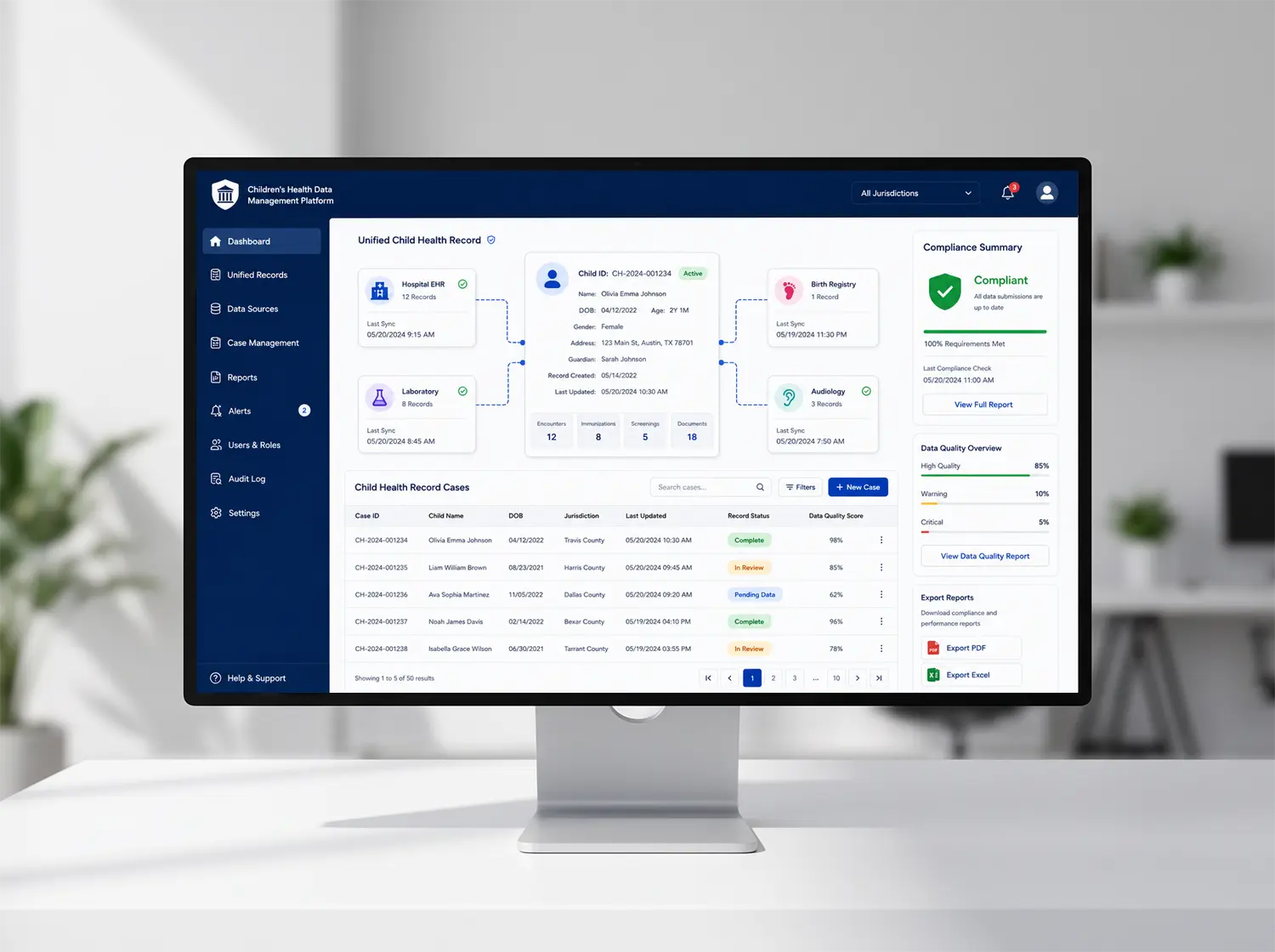
SMART CDMIS dashboard preview for child health monitoring and program analytics
HIPAA-aligned design Role-based access & audit HL7 / FHIR-ready integration 508 / WCAG-oriented UX Secure cloud deployment
Platform overview

About SMART® CDMIS

What Is a CDMIS - and Why Does It Matter?

A Child Development Monitoring Information System (CDMIS) is a centralized, secure digital platform that enables government health agencies to collect, track, manage, and analyze child health screening data - from newborn bloodspot screenings and audiology results to longitudinal follow-up care and multi-agency case management.

NebuLogic’s SMART® CDMIS goes far beyond traditional record-keeping. Built on our award-winning, low-code SMART® ICE (Intelligent Configuration Engine) framework, it delivers an AI-powered, interoperable platform trusted by state agencies in Maine, Massachusetts, Illinois, and Vermont - replacing fragmented legacy systems with a single source of truth for child health data.

Whether you’re managing statewide newborn screening programs, tracking pediatric health milestones, or coordinating cross-agency follow-up care, SMART® CDMIS delivers the tools to act faster, collaborate smarter, and report with confidence.

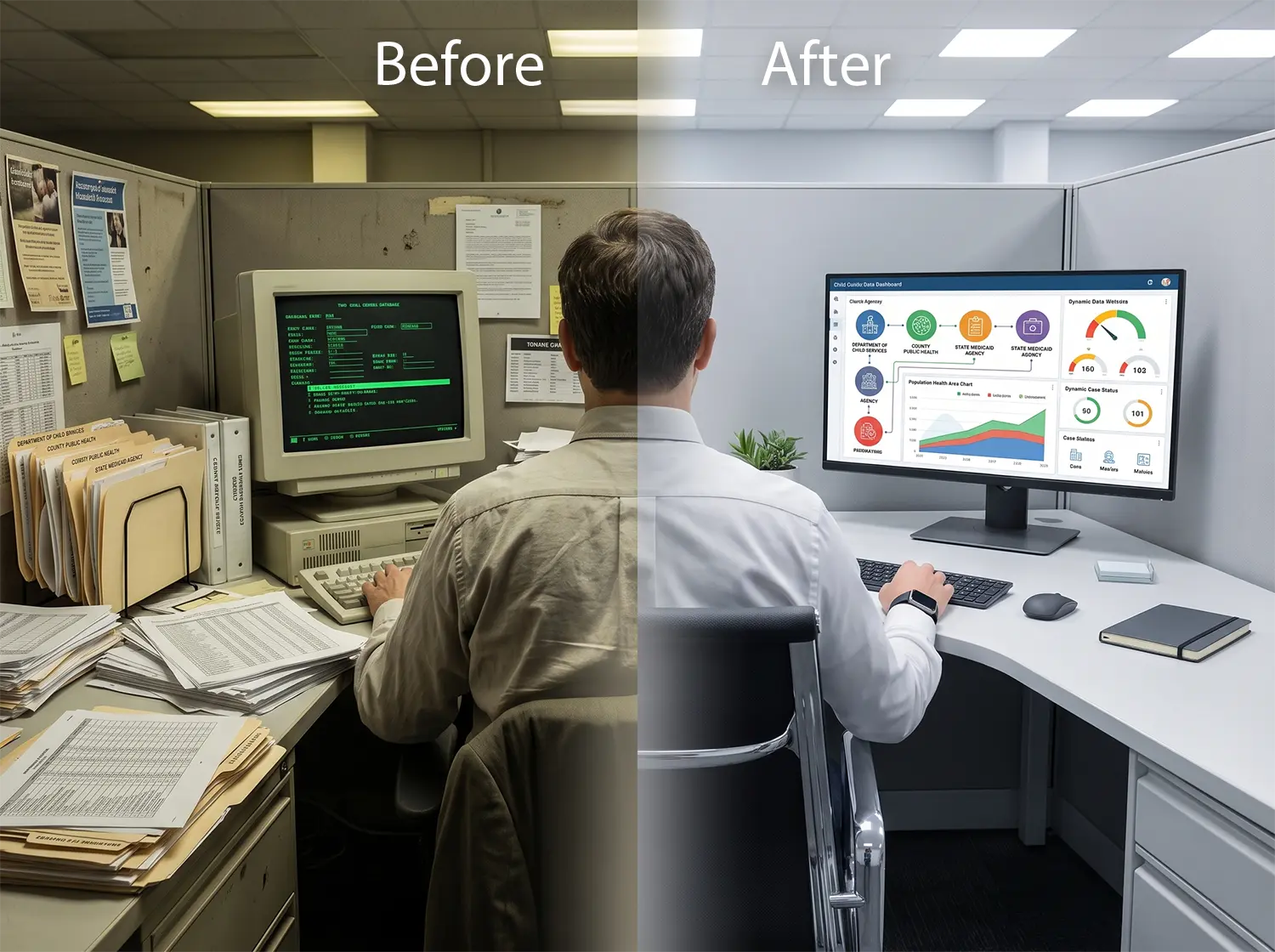
  • Replace fragmented spreadsheets and legacy databases with a unified, real-time platform
  • Track 12,000+ births per year with automated data ingestion from hospitals and labs
  • Ensure HIPAA, FIPA, Section 508, and state-specific compliance out of the box
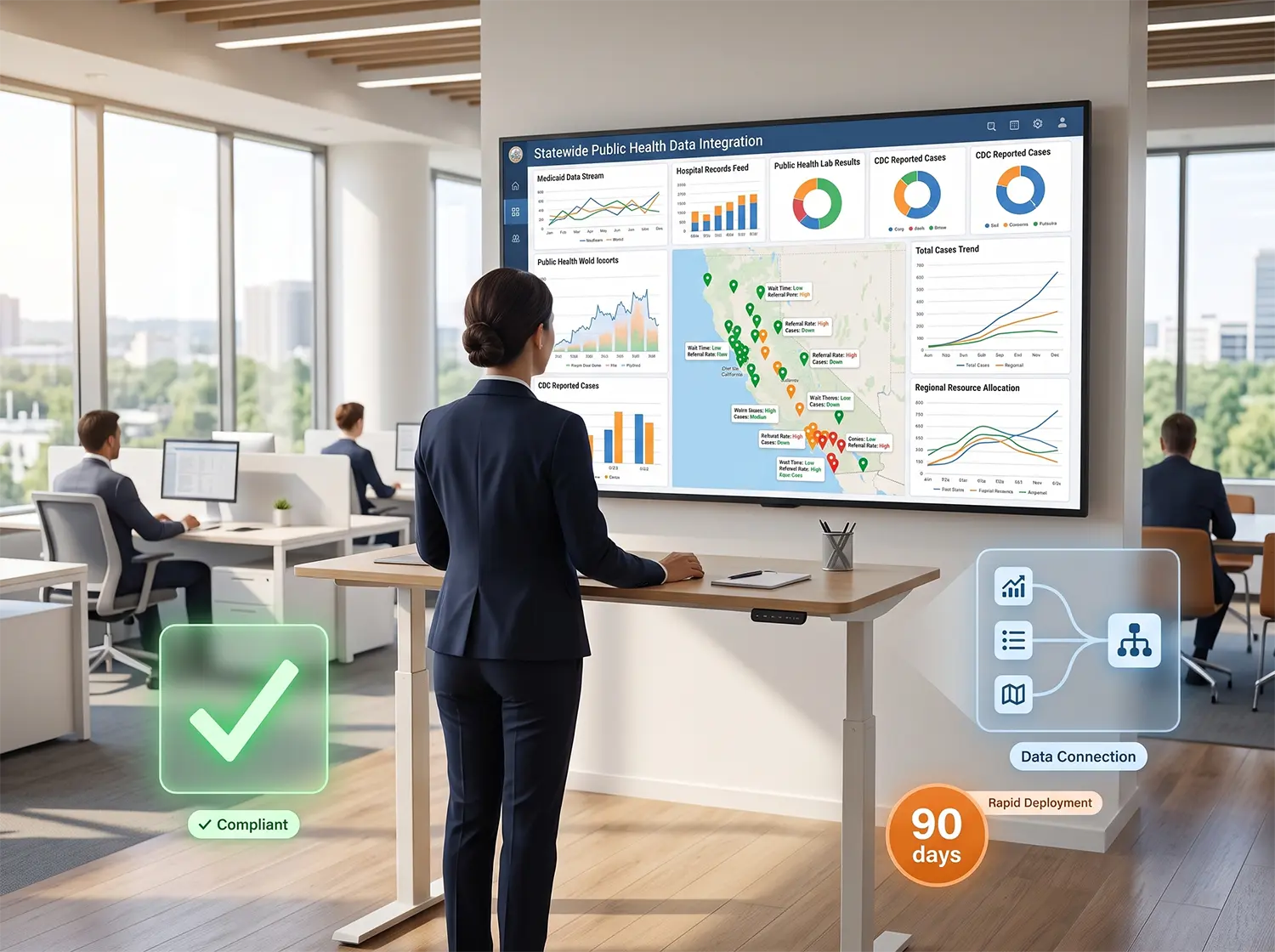
  • Deploy in 90 days - no multi-year implementation timelines required

Newborn Screening

Bloodspot, hearing & metabolic disorder tracking

Analytics & Reporting

AI-driven dashboards & exportable datasets

Case Management

Full lifecycle from intake to discharge

System Integration

HL7, FHIR, EHR & hospital data feeds

Security & Compliance

HIPAA, NIST & FedRAMP ready

Azure Cloud Hosting

U.S.-only data residency, 99.99% uptime

The problem

Critical Gaps in Child Health Data Management

Government agencies must coordinate screening, clinical follow-up, and program accountability across hospitals, labs, and community partners-often with tools that were never designed to work together.

Fragmented, Siloed Data Systems

Hospitals, labs, audiologists, and state agencies each maintain separate records in incompatible formats - making unified tracking nearly impossible and leading to missed follow-ups for at-risk children.

Unreliable Legacy Systems

Aging platforms like ChildLINK lack scalability, modern accessibility standards, and integration capability - forcing staff to rely on manual workarounds that create data entry errors and compliance risk.

Compliance & Reporting Burden

Meeting HIPAA, state privacy statutes, and federal reporting requirements (HRSA, CDC) demands continuous manual effort when systems lack built-in compliance automation and audit logging.

Limited Longitudinal Tracking

Without a unified participant record linking newborn screening to long-term outcomes, agencies cannot identify care gaps, measure program effectiveness, or support evidence-based policy decisions.

Poor Multi-Agency Collaboration

When hospitals, state departments, specialists, and follow-up providers operate in isolation, care coordination suffers. Children with complex conditions can fall through the gaps entirely.

Insufficient Analytics for Decision-Making

Ad hoc Excel exports and manual report generation prevent leadership from accessing real-time program performance data - delaying critical resource allocation and policy interventions.

Our solution

SMART® CDMIS: One Platform. Total Child Health Visibility.

NebuLogic’s SMART® CDMIS transforms how government agencies collect, manage, and act on child health data - replacing fragmented workflows with a single, secure, AI-powered system of record.

Centralized Data Platform

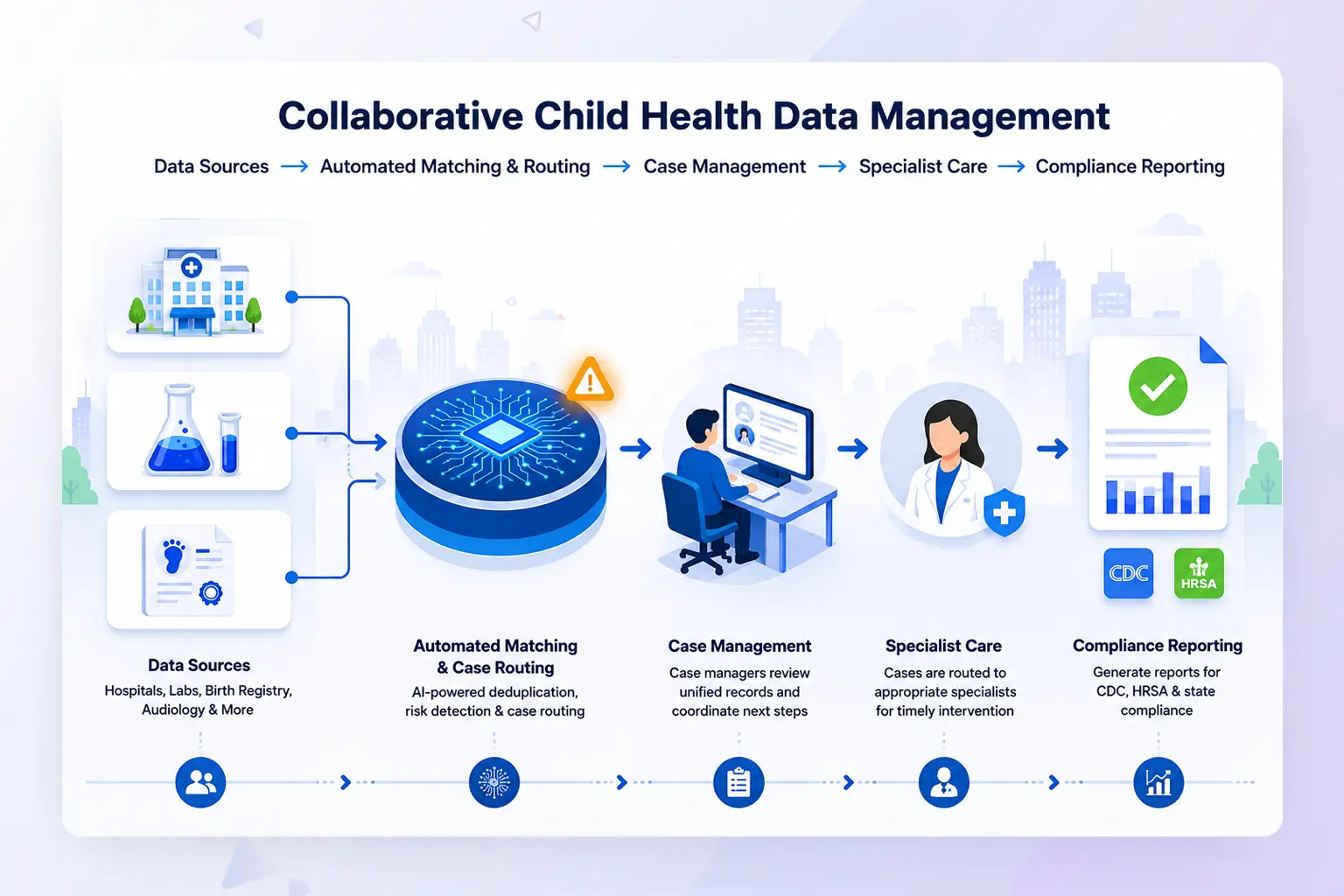
Consolidate data from hospitals, labs, audiology centers, birth registries, and EHR systems into a single, unified participant record - eliminating silos and enabling true longitudinal care tracking from screening to outcome.

AI-Powered Automation

Leverage NebuLogic’s proprietary AI engine for intelligent case creation and routing based on screening results, risk patterns, and demographic factors - reducing manual triage effort by up to 60% and accelerating time-to-intervention.

Compliance by Design

HIPAA, FIPA, Section 508, NIST 800-53, and FedRAMP compliance are baked into the platform architecture - not bolted on. Role-based access controls, audit logging, and encrypted data ensure regulatory readiness from day one.

Real-Time Analytics & Dashboards

Empower program directors with live dashboards tracking screening pass rates, diagnostic outcomes, follow-up completion, and population-level health trends - all exportable to Excel, CSV, PDF, or Word for regulatory reporting.

Seamless Multi-Agency Collaboration

Configurable role-based access enables secure data sharing across hospitals, state labs, specialist providers, and follow-up teams - with granular permissions ensuring each stakeholder sees exactly what they need, nothing more.

90-Day Deployment Commitment

Our proven SMART® PMM methodology delivers fully configured, tested, and go-live-ready implementations in approximately 90 days - with phased rollout, stakeholder training, and hypercare support built in from the start.

Core Modules

Every Capability Your Agency Needs

SMART® CDMIS is built from modular, pre-configured components that can be tailored to your program's unique workflows, data models, and reporting requirements.

Auto-Generated Unique Identifiers

Program-assigned identifiers and match-ready keys keep participants, households, and siblings linked while reducing duplicate records.

Configurable Intake & Screening Forms

Agency-approved forms with branching logic, validation, and version control for intake, re-screen, and program-specific data capture.

Full Lifecycle Case Tracking

From intake through closure with stages, owners, tasks, and auditable changes across internal teams and authorized partners.

Scheduling & Calendar Management

Visits, callbacks, and program milestones on shared calendars that respect roles, locations, and consent-aware visibility.

Case Linking & Family Records

Relate guardians, providers, and programs so staff see a coherent household and episode view within your jurisdiction’s policy.

Referral Tracking & Coordination

Routed referrals with SLAs, attachments, and outcome codes tied back to the participant record and supervisor dashboards.

Automated Multi-Source Data Ingestion

Automatically ingest data from birth and death certificate registries (DRVS), hospital discharge records, laboratory screening results, and audiology reports - eliminating manual data entry and ensuring near-real-time record accuracy.

Standards-Based API Integration

Connect to EHRs, HMIS, DOJ systems, court management platforms, and provider networks via HL7 v2.x, FHIR R4, REST APIs, and SFTP - configured as one-way, bidirectional, batch, or real-time data flows.

ETL Data Migration & Legacy Conversion

Migrate legacy datasets from systems like ChildLINK, Microsoft Access, and SQL Server using structured ETL pipelines - with field-by-field reconciliation, exception reporting, and County sign-off before go-live.

Data Quality Enforcement

Automated QA checks detect duplicates, null values, invalid entries, and out-of-range screening results at every stage - with exception reports, immutable audit logs, and configurable validation rules maintaining data integrity.

Flexible Export & Reporting Formats

Export participant records, aggregate datasets, and compliance reports in Excel, CSV, PDF, Word, HTML, TIFF, and JPEG formats - supporting federal reporting frameworks including CDC, HRSA, and state department requirements.

Federated External Data Access

Access external legacy datasets in real time through secure APIs or iFrame views - without duplicating or re-hosting data. Authorized staff can query historical records directly from within the CDMIS interface.

Real-Time Population Health Dashboards

Monitor screening pass rates, diagnostic outcomes, follow-up completion rates, and condition prevalence across your entire population in real time - with role-specific dashboard views for administrators, clinicians, and program analysts.

Ad Hoc Query Builder

Empower analysts with a self-service, drag-and-drop query interface - filter by birth facility, condition, date range, screening status, provider, demographics, and more. No SQL knowledge required.

Longitudinal Outcome Tracking

Track individual children from newborn screening through treatment and long-term health outcomes - measuring program effectiveness, identifying care gaps, and supporting evidence-based policy decisions with reliable longitudinal data.

AI-Driven Anomaly Detection

NebuLogic’s proprietary AI engine continuously monitors data patterns - automatically flagging anomalies, unmatched records, and high-risk cases for human review before they become compliance issues.

Birth Facility Performance Analytics

Compare screening completion rates, follow-up timeliness, and diagnostic accuracy across hospitals and birth facilities - identifying systemic performance gaps and enabling targeted quality improvement initiatives.

Regulatory & Compliance Reporting

Generate pre-built compliance reports aligned with federal and state mandates - including CDC Newborn Screening reporting, HRSA performance measures, and state department annual reports - with one-click export capability.

Role-Based Access Control (RBAC)

Define granular user roles and permissions - controlling which users can view, add, edit, or delete records at the field, record, and module level. Supports 25+ configurable role hierarchies for complex multi-agency environments.

End-to-End Encryption

All data is encrypted at rest (AES-256) and in transit (TLS 1.2+) - with U.S.-only data residency on Microsoft Azure Government Cloud and geofencing to ensure sensitive health data never leaves domestic boundaries.

SSO & Multi-Factor Authentication

Supports SAML 2.0-compliant Single Sign-On with Azure Active Directory integration, OAuth2, and MFA - meeting federal identity and access management standards while reducing credential management overhead for IT teams.

Immutable Audit Logging

Every user interaction, data modification, export, and access event is captured in tamper-proof audit logs - with annual access reviews and long-term retention policies that satisfy federal and state records management mandates.

OWASP-Aligned Application Security

Continuous security testing using SAST (static code analysis), DAST (dynamic application testing), manual code reviews, and annual penetration testing - with CVSS-scored vulnerability remediation within defined SLA windows.

Disaster Recovery & Business Continuity

99.99% uptime SLA backed by redundant Azure cloud architecture, daily backups (RPO: 24 hours, RTO: 4 hours), and annually tested disaster recovery protocols - ensuring your child health programs never experience data loss or extended downtime.

Why it works

Measurable Outcomes for Government Health Programs

SMART® CDMIS doesn’t just store data - it transforms how your agency delivers, measures, and improves child health programs across your state or jurisdiction.

Accelerate Early Identification & Intervention

AI-powered case routing and intelligent anomaly detection flag high-risk children faster - connecting families with specialist care before conditions escalate. Agencies using SMART® CDMIS have reduced time-to-follow-up for flagged screenings by significant margins, directly improving health outcomes for the most vulnerable populations.

Break Down Agency Silos

Federated access controls and standards-based API integration connect hospitals, labs, audiology centers, and state departments in a shared data ecosystem - enabling coordinated care and reducing duplicate testing. Multi-agency collaboration that once took weeks of email chains now happens in real time within the platform.

Reduce Administrative Burden & Costs

Automated data ingestion, intelligent routing, and self-service reporting eliminate the manual work that consumes staff bandwidth. The low-code SMART® ICE platform means IT teams spend less time on custom development and more time on mission-critical priorities - reducing total cost of ownership compared to purpose-built alternatives.

Demonstrate Program Impact to Funders

Real-time dashboards and exportable compliance reports give program directors the evidence they need to secure continued funding, justify budget requests, and demonstrate program effectiveness to legislative bodies and federal grantors - with data that is accurate, timely, and audit-ready.

Real-world applications

Who Uses SMART® CDMIS?

Purpose-built for the specific needs of government health agencies managing pediatric and public health programs at scale.

State Health Departments

Statewide newborn screening programs tracking tens of thousands of births annually - automating data collection from all participating hospitals, managing follow-up workflows, and generating federal compliance reports for CDC and HRSA with a single click.

Newborn screening Federal reporting Population health

Child Welfare Agencies

Child welfare and early intervention programs managing multi-agency case records, service referrals, and longitudinal outcome tracking for children with developmental disabilities, metabolic disorders, and hearing impairments - from identification through school age and beyond.

Case management Early intervention Multi-agency

Public Health Laboratories

State public health labs processing newborn bloodspot specimens and managing result reporting to birth hospitals, families, and primary care providers - with automated exception handling for out-of-range results and confirmed condition case escalation.

Lab integration Result reporting Exception mgmt.

Hospital Systems & Birth Centers

Hospitals and birthing facilities that need to report screening specimens, upload discharge data, and track follow-up compliance through a secure provider portal - with role-based access limiting visibility to their own patients and facilities.

Provider portal Specimen reporting HIPAA compliant

Audiology & Specialist Programs

Newborn hearing screening programs and specialist follow-up providers documenting diagnostic results, treatment plans, and device fittings - with automated referral tracking ensuring every infant who fails initial screening receives timely audiological evaluation.

Hearing screening Referral tracking Outcome monitoring

Early Childhood Programs

IDEA Part C early intervention programs, Head Start, and school readiness initiatives tracking developmental screenings, service enrollment, Individualized Family Service Plans (IFSPs), and transition outcomes - with data portability for school-age handoffs.

IDEA Part C IFSP tracking Developmental screening
Connectivity

Connects to the Systems You Already Use

SMART® CDMIS integrates seamlessly with government health IT infrastructure through standards-based APIs, secure file transfers, and configurable data exchange protocols - with no vendor lock-in.

EHR Systems HL7 v2.x / FHIR R4
Birth Registries DRVS / Vital Records
CDC / HRSA Federal Reporting APIs
Microsoft Azure Government Cloud Hosting
Lab Systems (LIS) LOINC / HL7 Results
HUD HMIS Housing & Homelessness Data
Azure Active Directory SAML 2.0 / OAuth2 SSO
GIS Platforms ESRI / Google Maps

SMART® ICE Integration Architecture

Real-Time & Batch

Bidirectional or one-way data flows configured per integration partner

Secure SFTP & API

Encrypted file transfers and REST API endpoints with access token management

Low-Code Configuration

New integrations deployed through configuration - not custom code - for rapid go-live

Our track record

Why Government Agencies Choose NebuLogic

We're not a startup selling vaporware. SMART® CDMIS is a live, operational platform with a proven track record across U.S. state and local government deployments - backed by a company that has earned the trust of the public sector since 2011.

500+

Successful Deployments

Over 500 enterprise technology solutions delivered across federal, state, and local government agencies - with a 100% customer satisfaction record maintained since founding.

90

Days to Go-Live

Our proven SMART® PMM methodology delivers fully configured, tested, and trained implementations in approximately 90 days - versus 18–24 month timelines common with custom-built alternatives.

25K+

Government Users Served

More than 25,000 government staff and service provider users currently operate on NebuLogic's SMART® platform ecosystem - spanning public health, substance use, child welfare, and civic services programs.

ISO

9001:2015 Certified

NebuLogic is ISO 9001:2015 certified, demonstrating a commitment to quality management systems, repeatable delivery processes, and continuous improvement - essential for mission-critical government health programs.

4

States Live on CDMIS

SMART® CDMIS is actively deployed in Maine (child health screening), Massachusetts (substance use), Illinois (opioid helpline), and Vermont (SUD helplink) - with the same core team available for your implementation.

HUB

Certified & SAM.gov Registered

TX HUB-certified, MBE/SBE recognized through NCTRCA, and fully registered in SAM.gov - satisfying procurement requirements for government contracts and demonstrating our commitment to diverse, public-sector partnerships.

Ready to Modernize Your Child Health Data Program?

Join government agencies across the U.S. that trust NebuLogic's SMART® CDMIS to protect children's health data, accelerate care coordination, and demonstrate measurable program outcomes. Let's build your roadmap together.

Frequently asked questions

Common questions from public health IT, program, and procurement teams evaluating SMART® CDMIS.

A Child Development Monitoring Information System (CDMIS) is a specialized government-grade platform for managing population-level child health screening programs - distinct from an EHR in that it is designed for surveillance, longitudinal tracking, multi-agency data sharing, and regulatory compliance reporting across an entire jurisdiction. Unlike clinical EHRs focused on individual patient encounters, a CDMIS connects hospitals, labs, state agencies, and community providers into a unified data ecosystem for program oversight and public health decision-making.
NebuLogic's SMART® PMM methodology delivers fully configured, tested, and go-live-ready CDMIS implementations in approximately 90 days from project kick-off. This includes stakeholder discovery workshops, system configuration, data migration from legacy systems, integration with partner systems, staff training, User Acceptance Testing (UAT), and production go-live. The 90-day timeline is achievable because SMART® CDMIS is a pre-built, configurable COTS platform - not custom-developed software.
Yes. SMART® CDMIS is fully HIPAA compliant, with built-in safeguards including end-to-end encryption (AES-256 at rest, TLS 1.2+ in transit), role-based access controls, immutable audit logging, Business Associate Agreement (BAA) support, and field-level data masking. The platform is also compliant with FIPA (Florida Information Protection Act), NIST SP 800-53, FedRAMP Moderate and High baselines, and ISO 27001/27017 - making it suitable for the most sensitive child health data programs.
Yes. SMART® CDMIS integrates with existing health IT systems through standards-based protocols including HL7 v2.x, FHIR R4, REST APIs, SFTP, and web services. The platform has been successfully integrated with EHR systems, state birth and death registries (DRVS), laboratory information systems (LIS), HUD HMIS, DOJ reporting systems, and GIS platforms. Integrations can be configured as one-way or bidirectional, and in batch or real-time mode - based on the requirements of each partner system.
NebuLogic provides full-service legacy data migration using structured ETL (Extract, Transform, Load) pipelines. The process includes data profiling and gap analysis, field-by-field mapping specifications, automated cleansing and deduplication, multiple trial load and validation cycles, and formal County/agency sign-off before go-live. We have successfully migrated data from ChildLINK, Microsoft Access databases, SQL Server, Excel/CSV repositories, and other legacy systems - maintaining full audit traceability throughout the process.
Post-go-live support includes a dedicated technical support hotline, an online service request portal (Jira-integrated), email support (Support@NebuLogic.com), and a structured incident management process with defined SLA tiers: High-severity issues are responded to immediately with 2-hour mitigation targets; Medium-severity within 6 hours; Low-severity within 2 business days. Ongoing support also includes proactive security patching, system performance monitoring, quarterly roadmap reviews, continuous training sessions, and annual onsite refresher engagements.
Yes. SMART® CDMIS includes pre-built reporting templates aligned with federal reporting requirements including CDC Newborn Screening program reports, HRSA performance measures, and state department annual compliance reports. The SMART® Reporter module supports ad hoc query building, scheduled report generation, and one-click export to Excel, CSV, PDF, and Word formats. Reports can be filtered by date range, birth facility, condition, screening status, demographics, and dozens of other parameters to meet specific federal submission requirements.
Yes. SMART® CDMIS fully complies with Section 508 of the Rehabilitation Act and WCAG 2.1 AA accessibility standards - ensuring that both public-facing portals and internal staff interfaces are accessible to users with disabilities. The platform is compatible with all major browsers (Chrome, Edge, Firefox, Safari) and supports assistive technologies including screen readers and keyboard navigation. All documentation and training materials are also produced in ADA-compliant formats.

Related solutions

Explore adjacent capabilities on the SMART® platform.

Try searching for: